Designing Engaging Educational Content: A Visual Guide
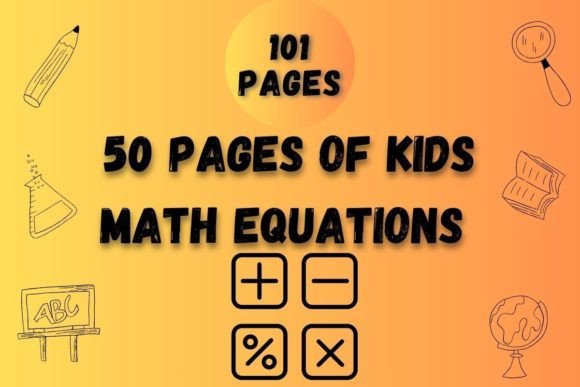
In the competitive landscape of educational design, finding assets that are both pedagogically sound and visually flexible is essential for creating effective learning materials. A resource like 50 Pages of Kids Math Equations offers a robust foundation for designers tasked with developing educational content, providing a structured yet customizable framework for teaching fundamental arithmetic. This comprehensive collection, featuring 101 pages of editable and print-ready files, transforms basic mathematical operations into a polished visual experience suitable for a variety of creative projects.
The Role of Visual Hierarchy in Educational Assets
For graphic designers working in the educational sector, the challenge often lies in balancing clarity with engagement. Mathematics can be intimidating for young learners, making the visual design of the worksheet critical. A well-structured file containing 50 operations pages and 50 solutions pages allows for the implementation of a strong visual hierarchy. By utilizing the high-quality 8.5x11 inch format, designers can manipulate white space, font sizing, and grid layouts to guide the student's eye naturally from the problem to the solution area. This approach ensures that the content is not only informative but also accessible, reducing cognitive load through clean typography and logical composition.
Customization and Brand Identity in Learning Materials
One of the primary advantages of utilizing an editable PPT file alongside a PDF file is the ability to maintain brand consistency. Whether you are a freelance designer creating materials for a tutoring center or a school district aligning with specific branding guidelines, these assets provide the flexibility needed to integrate logos, specific color palettes, and institutional fonts. This level of customization is vital for brand identity, ensuring that every piece of communication—from handouts to digital displays—feels cohesive and professional.
Practical applications for these creative assets extend beyond the classroom. They can be adapted for:
- Packaging Design: Creating interactive inserts for educational toys or board games.
- Digital Marketing: Developing free lead magnets for parenting blogs or educational apps to drive user engagement.
- Editorial Design: Designing activity sections for children’s magazines or workbooks.
- Social Media Graphics: Adapting individual equations into shareable "Did You Know?" or "Daily Challenge" posts for platforms like Instagram or Pinterest.
Integrating Math into Modern Aesthetic Trends
Modern educational design trends lean toward minimalism and interactivity. When working with a resource featuring 9 operations per page, designers have ample room to incorporate illustrations and iconography that support the mathematical concepts without cluttering the layout. This is particularly useful in UI design for educational apps, where the equations can be digitized into interactive elements. The goal is to create a user experience (UX) that feels rewarding and intuitive, encouraging students to progress through levels of difficulty.
Furthermore, the inclusion of solutions pages allows for the creation of merchandise or self-checking tools. Imagine a flashcard set where the graphic design on the back mirrors the front, providing a clean, legible answer. This attention to detail elevates the perceived value of the product, whether it is a physical print or a digital download.
Optimizing Your Design Workflow
To maximize the utility of these equations, consider the following workflow tips:
- Establish a Grid System: Use the editable PPT to set up a consistent grid. This ensures that numbers and symbols are perfectly aligned, which is crucial for readability in mathematics.
- Select Legible Typography: Choose sans-serif fonts for the equations to ensure they are easily readable by children, while using display fonts for headers to add personality.
- Utilize Color Psychology: Apply a color palette that is vibrant yet easy on the eyes. Use color-coding to differentiate between addition, subtraction, multiplication, and division to aid in cognitive recognition.
Ultimately, the integration of high-quality educational content into design projects requires a thoughtful approach to visual communication. By leveraging versatile assets like these math equation pages, designers can create materials that are not only aesthetically pleasing but also functionally superior, fostering a better learning environment and strengthening the overall impact of the educational brand.