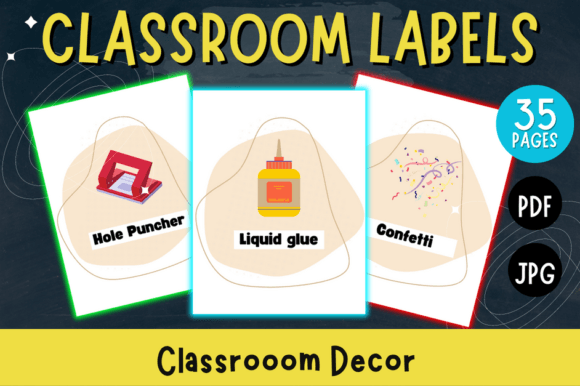
Classroom Labels Decor: A Designer's Guide to Functional Beauty
Effective visual design transcends mere aesthetics; it creates order, communicates intent, and guides the user experience. This principle is perfectly embodied in Classroom Labels Decor, a creative asset that merges graphic design principles with practical functionality to transform educational spaces. Far from simple stickers, these labels are a masterclass in visual hierarchy, typography, and brand identity applied to an environment.
The Visual Design Principles Behind Effective Classroom Labels
From a professional standpoint, high-quality classroom labels are a case study in applied design. They must achieve several goals simultaneously: be instantly legible, visually cohesive, and contextually appropriate. This involves careful consideration of typography for clarity, a harmonious color palette to categorize without overwhelming, and a consistent brand identity that makes the classroom feel intentional and organized. The result is a system that enhances user experience (UX) for both the teacher and the students, reducing cognitive load and fostering independence.
The true power of a curated set, like the 35-page PDF and JPEG collection from ModernKids Learning Press, lies in its versatility as a design asset. These are not just printables; they are pre-designed components that can be integrated into a broader creative project.
Practical Applications Beyond the Classroom Wall
While designed for educational settings, the principles and even the assets themselves have surprising applications across various graphic design and creative projects. Consider how a structured labeling system can elevate other areas:
- Brand Identity & Packaging Design: A consistent set of labels can inspire a cohesive product line. The clean, organized aesthetic is ideal for artisanal goods, children's products, or stationery packaging design where clear categorization is key.
- Digital Marketing & Social Media Graphics: Use the design motifs—icons, color blocks, and clean typography—as elements in social media content or infographics. They can help organize information in web design sidebars or create engaging UI design components for educational apps.
- Editorial Layouts & Presentations: Incorporate the label styles as call-out boxes, chapter markers, or sidebar elements in editorial design or professional presentations. This brings a modern, organized aesthetic to print design and digital slides.
- Merchandise & Advertising: The playful yet structured style can inform the visual design of posters, banners, or merchandise for educational brands, tutoring services, or children's events.
Integrating Functional Design into Your Creative Workflow
Selecting and using such assets effectively requires a designer's eye for detail. Here’s how to leverage them for maximum impact:
- Evaluate for Consistency: Ensure the color palette and typography align with or can be adapted to your existing brand identity. Look for scalable vector files (or high-resolution JPEGs) to maintain quality across print and digital.
- Consider the Audience: The primary audience for classroom labels is young learners. This dictates modern aesthetics that are friendly, clear, and engaging. For other projects, you may adapt the color scheme or font weight to suit a different demographic while retaining the core organizational structure.
- Apply Visual Hierarchy: Use the labels as a template for creating your own. Understand how the original design uses size, color, and placement to create a clear visual hierarchy, then apply that logic to your own creative assets, whether for a logo design system or a digital marketing campaign.
Ultimately, resources like Classroom Labels Decor remind us that the best graphic design solves problems beautifully. By investing in thoughtfully designed creative assets, designers and creators can streamline their design workflow, ensure a professional presentation, and communicate with greater clarity and impact. It’s a testament to how strategic visual design can turn any environment—and any project—into a model of efficiency and inspiration.